Frequently Asked Questions (FAQ) about Kichwa Lodge
Where are you located?
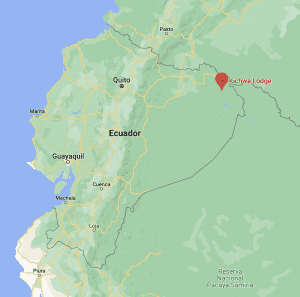
We are located in the northeast corner of Ecuador. While there are no roads connecting to our neighbors, we are located near the borders of Colombia and Peru.
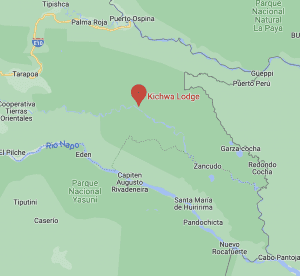
Within the Cuyabeno Wildlife Reserve, we are far removed from the majority of other tourism projects found in the reserve’s western half. Therefore, a visit to our lodge means fewer interactions with other tourists.
Are you an eco-lodge?
We try our best to be! Our lodge is built using locally harvested products with minimal impact to our primary forests. We understand that our forests are worth more as a haven for wildlife than chopped down for buildings.
As is appropriate for a lodge that wants to practice conservation, we strive to be as eco-friendly as possible. Our community participates in the #zeroplastic campaign and we encourage guests to bring their own reusable water bottles rather than rely on individual plastic bottles of water. We practice recycling, sending our trash outside of the Cuyabeno Reserve to Tarapoa. We use solar electricity and would like to expand our system. Electricity is available 24-hours a day.
What are your rooms like?
Accommodations at Kichwa Lodge combine traveler comfort with the preservation of our rainforest habitat. The lodge has been built using traditional materials in the local architectural style to blend in with the lush surroundings.
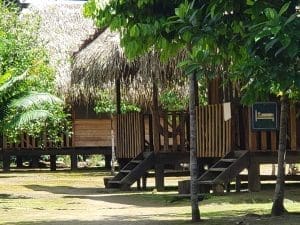
The cabins, which include single, double, and triple occupancy rooms, offer spacious en-suite bathrooms and walk-in showers.

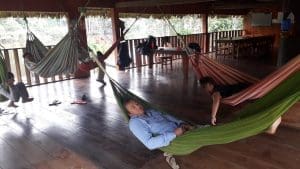
Some of our rooms feature floor to ceiling windows for a more immersive experience. All cabins are insect-proofed and contain comfortable beds with mosquito netting. We also provide comfortable hammocks under a protected roof for resting outdoors in even the rainiest of weather.
What kind of food do you serve?
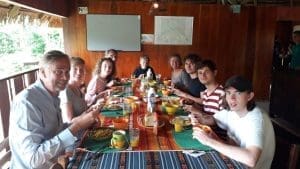
We offer a mix of international and traditional Ecuadorian cuisine. Our chef is able to prepare meals for vegetarians and will cater to any special needs or food allergies. We love highlighting local products.
How do we get to Cuyabeno Kichwa Lodge?
Most guests start their journey in Quito, either flying into Coca with pickup the same day, or driving and staying overnight in Coca with pickup at your hotel the next morning. From Coca, we travel by land to Tierra Orientales, where you’ll board the boat for the river journey to the lodge. We offer two river transport options, depending on your group size. Groups of 2 to 4 travelers ride in a traditional canoe — a peaceful way to travel and take in the Amazon landscape up close. Groups of 6 to 15 travelers can take our speedboat, which cuts travel time significantly while still following the same scenic route.
Should we fly or drive to Coca?
Both options work, and it comes down to your priorities. Flying is the faster choice, but Coca has a small regional airport served by limited carriers, so flights can occasionally be delayed or cancelled due to weather — it’s worth building a buffer into your schedule in case that happens.
Driving avoids that risk entirely, but it’s a long day: the route follows a major road that’s often in poor condition, and with stops for lunch and bathroom breaks, plan on 6 to 8 hours of travel time. If you drive, we recommend arriving in Coca the evening before your lodge transfer so you’re rested for the boat journey ahead.
How long does the boat trip take?
Travel time depends on your group size, since it determines which boat you’ll use.
Groups of 2 to 4 travel by canoe: the journey to the lodge takes about 3 hours, and the return trip takes about 4 hours. Because of this, canoe departures leave at 4:00 a.m. — often in early-morning rain, which can cut into guests’ rest before the trip.
Groups of 6 to 15 travel by speedboat, which isn’t available for smaller groups, and travel time drops to just 1 hour each way. This means departures can leave at 6:00 a.m. instead of 4:00 a.m., giving guests two extra hours of rest before setting out, plus more time at the lodge to relax, enjoy the facilities, and take part in activities like jungle hikes, birdwatching, canoe trips, and cultural experiences with the Kichwa community.
What type of boat transportation to you use?
We use two types of boats, depending on group size.
For groups of 2 to 4 travelers, we use a traditional canoe, offering a quieter, more intimate ride through the Amazon landscape.
For groups of 6 to 15 travelers, we use a covered speedboat, which cuts travel time to about 1 hour each way instead of the canoe’s 3 to 4 hours.
Both options follow the same scenic river route to the lodge — the choice simply comes down to group size and how much time you’d like to spend on the water.
What about airport transfers?
Most guests arrive in and depart from Coca, whether by air, car, or bus. For those flying, return flights to Quito are typically scheduled around 10:30 a.m. Our speedboat service ensures a punctual, comfortable transfer back to Coca with plenty of time to spare, whatever your onward connection.
What kind of wildlife will I see?
We guarantee that you will see wildlife! While we cannot guarantee any specific animal sighting, there is a good chance that you will see up to 9 species of monkeys, including the diminutive pygmy marmoset to the loud and raucous Howler Monkey.
In addition to monkeys, there are 50 species of bats and 60 or so other species of mammals including anteaters, sloths, and ocelots. It is possible to see many species of lizards and snakes, including the giant anaconda. While we do have venomous snakes in the reserve, they rarely bother humans. It is more likely that you will run into a poison-dart frog, so we encourage you to be aware while hiking both day and night.
There are also tons of insects, including many colorful butterflies and grasshoppers that defy description. Spiders are best seen at night. And that leaves us with birds — so many different species to see! From the prehistoric-looking Hoatzin to the majestic and colorful Macaws, you will be glad to have brought along a pair of binoculars.
What kind of gear should I bring?
Weather in the Cuyabeno Wildlife Reserve is unpredictable, especially with climate change. We tell people to expect rain on any day. That said, our rainy days are also warm days and some people prefer to use a rain poncho (that we provide) rather than heavy duty rain gear.
We also provide rubber boots up to size 44 for walking muddy trails. If you would prefer to use your own hiking boots, consider bringing gaiters and plan to wash off lots of mud each evening.
We recommend that your clothes be light and quick drying, and easily layered. Although the weather is generally warm, some guests enjoy having a warm layer for cooler evenings. If you want a better look at animals, bring a pair of binoculars. A camera with zoom lens is always a great item to have on hand, as is a day pack.
How can I support the Kichwa Community?
There are many ways to support our community. First, we would love for you to share our website and tours with your friends and family. Most of our visitors come because someone they know recommended us.
Second, please like us on social media:
Finally, if you would like to make a donation to help our community, we can accept donations to PayPal via info@kichwalodge.com or you can use the payment links found here.
Who are your employees?
Our employees are Kichwa community members. At the height of our operation, we supported more than 90 families through jobs related to the Kichwa Lodge. We hope to return to those numbers as tourism returns to Ecuador.
What are your Covid guidelines?
Health and Safety Measures against COVID-19: Cuyabeno has received the Safe Travels Certificate granted by the WTTC Safe Travel. In Ecuador, tourism trips for nationals and foreigners re-opened in November 2020. In order to remain open, we comply with international Biosafety standards including:
- Providing information
- No mixing of different parties of guests inside the lodge
- Strictly complying with hygiene rules like handwashing
- Maintaining an appropriate social distance
Can I purchase handicrafts on my visit?
Yes! Our community offers many different handicrafts for sale. These goods use locally sourced and sustainably harvested materials. Colors come from natural dyes that we have used for generations.
Can I reserve through a travel agency?
While some of our guests arrive with their own guides or agencies, we prefer working directly with our clients. This saves our clients money as they can purchase the trip without mark-ups. Our community also benefits as we receive all proceeds from the trip to reinvest in our project and community.
Who benefits from your community tourism project?
A group of young adults started the Kichwa Lodge with the guidance and advice from community elders. We hire local Kichwa to operate the lodge so that your visit helps our local families, including those with school-age children.